
Surging Fuel Costs Challenge GOP Electoral Strategy Focused on Economic Relief
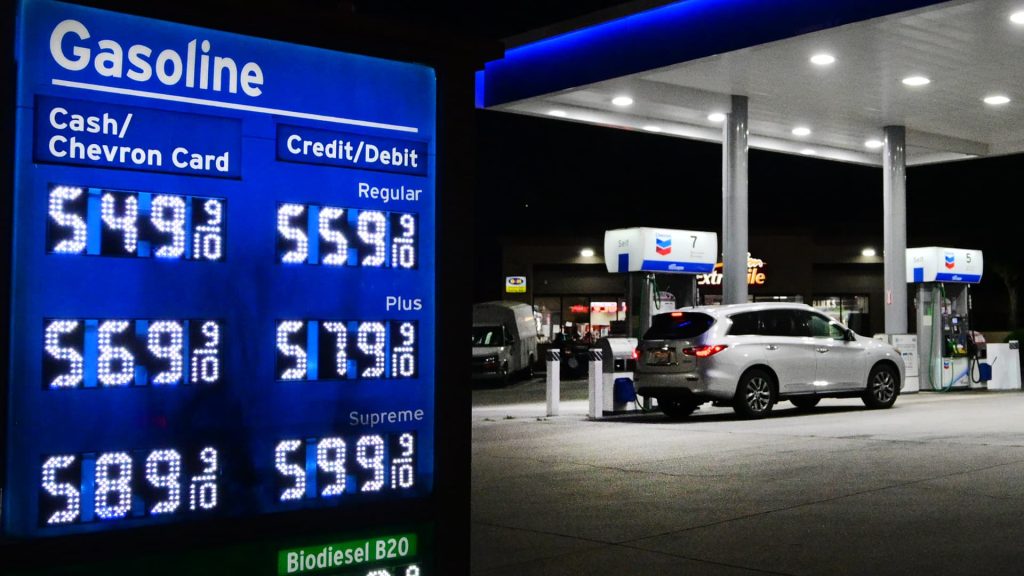
Escalating gasoline prices and ongoing military conflict in Iran are creating complications for Republican electoral strategies centered on economic affordability ahead of November’s elections.
Members of the Republican House caucus convened in Miami this week to develop legislative priorities and campaign messaging emphasizing reduced costs and additional tax relief for American families.
Several attendees at the conference recognized that the dramatic increase in fuel costs—climbing over 60 cents per gallon within the past month according to AAA data—presents significant challenges, though they maintain confidence in President Trump’s assurances that the Iranian conflict will conclude rapidly, leading to price stabilization.
Following Trump’s statements to both legislators and financial markets indicating the military operation was progressing ahead of projections, House Speaker Mike Johnson of Louisiana reinforced that the conflict is approaching completion and fuel prices would normalize accordingly.
Johnson addressed reporters at the Republican gathering, stating that while the Strait of Hormuz remains blocked by Iranian forces, its reopening is anticipated within weeks, which should restore normal pricing at gas stations nationwide.
Numerous Republican representatives expressed optimism that the conflict’s resolution in coming weeks would alleviate fuel price pressures, preventing a significant political liability as Election Day approaches in November.
However, some members privately voiced apprehensions that elevated gas prices and military uncertainty could eclipse their policy-focused agenda. Republicans maintain narrow House control with a 218-214 advantage and three vacant positions. A special election for the seat vacated by Representative Marjorie Taylor Greene of Georgia is scheduled for Tuesday.
One Republican lawmaker, speaking anonymously to avoid contradicting official party positions, raised critical questions about mission clarity, allied participation, and energy market impacts that remain unanswered. The representative emphasized the necessity of reopening the Strait of Hormuz.
Another GOP member, also requesting anonymity, acknowledged elevated fuel costs as problematic while expressing hope for price reductions by Election Day.
Representative Brett Guthrie of Kentucky, who leads the House Energy and Commerce Committee, emphasized the urgency of addressing high gas prices, noting his personal experience with increased costs at fuel stations.
Guthrie acknowledged concerning short-term price spikes during a brief interview at the Republican conference, while arguing that party members should articulate the rationale behind Iranian military action, specifically preventing nuclear weapons development and preempting attacks on American and allied interests.
The military operation faces significant public opposition, with multiple surveys indicating majority disapproval among Americans. According to Reuters/Ipsos polling, approximately 29% of Americans support the Iranian conflict, while most expect continued fuel price increases.
Representative Aaron Bean of Florida reported constituent concerns regarding oil price volatility, responding by arguing that current economic pain will prove worthwhile once Iran establishes new governmental leadership.
Bean compared the situation to street construction projects, explaining that temporary inconvenience and traffic disruption ultimately result in improved, safer infrastructure once work concludes and barriers are removed.