
NASA’s 1,300-Pound Van Allen Probe A Set for Uncontrolled Earth Reentry
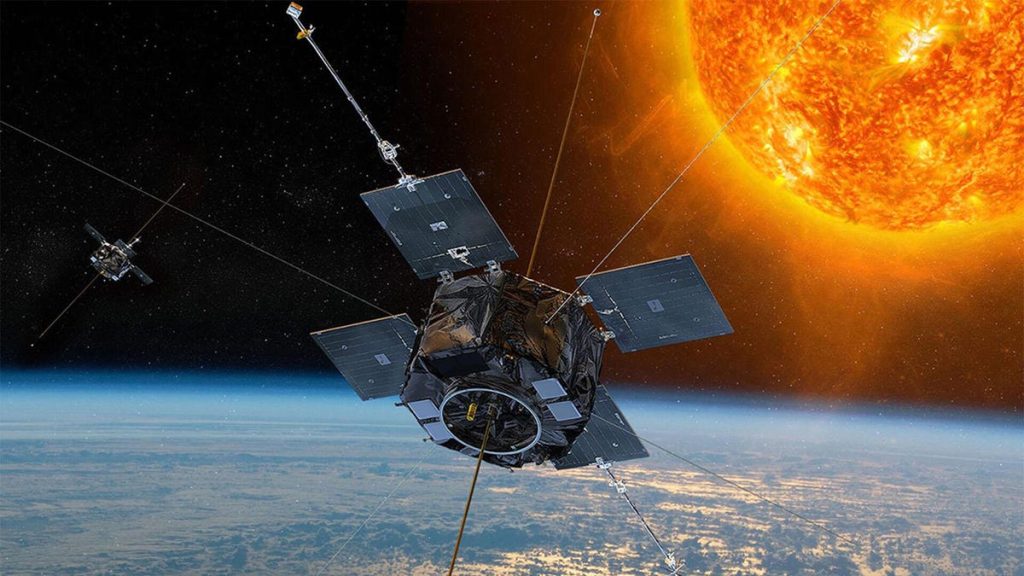
A massive NASA satellite weighing 1,300 pounds is hurtling toward an uncontrolled reentry into Earth’s atmosphere. The Van Allen Probe A spacecraft is expected to begin its descent around 7:45 p.m. Eastern Time on Tuesday, though NASA acknowledges this timing could vary by up to 24 hours in either direction.
The spacecraft originally launched in 2012 as part of a dual-satellite mission designed to study the Van Allen radiation belts surrounding our planet. These radiation zones form when solar particles become trapped within Earth’s magnetic field. While initially planned for a two-year mission, both probes continued collecting valuable radiation data for seven years before depleting their fuel supplies in 2019.
Without propellant to maintain proper orientation toward the sun, the satellites could no longer power their solar arrays and subsequently went offline. NASA’s initial projections suggested the defunct probes would remain in orbit until 2032, but these calculations failed to account for the current period of heightened solar activity.
The ongoing solar maximum has generated increased space weather activity, creating additional atmospheric drag that accelerated the satellite’s orbital decay beyond original estimates. This phenomenon occurs when enhanced solar wind output causes Earth’s upper atmosphere to expand, creating more resistance for orbiting objects.
The scientific data collected by these probes continues to provide crucial insights for understanding how solar radiation affects communication networks, GPS systems, electrical grids, and crew safety aboard the International Space Station. The same radiation phenomena studied by the Van Allen missions also generate the spectacular aurora displays that have been increasingly visible at lower latitudes recently.
Safety Concerns for Ground Impact
While atmospheric friction will destroy most of the spacecraft during reentry, NASA anticipates that certain components may survive the fiery descent and reach Earth’s surface. However, the space agency emphasizes that the risk to human safety remains extremely low.
Current statistical models indicate approximately a one-in-4,200 chance that falling debris could cause injury to people on the ground. The U.S. Space Force maintains continuous tracking of the satellite’s trajectory and will provide updates if risk assessments change.
The mission’s second spacecraft, Van Allen Probe B, faces a similar fate but is not expected to reenter Earth’s atmosphere until after 2030, giving scientists additional time to monitor its orbital decay.