
Pop Star’s Latest Music Video Draws Striking Parallels to Frida Kahlo’s Surrealist Masterpiece
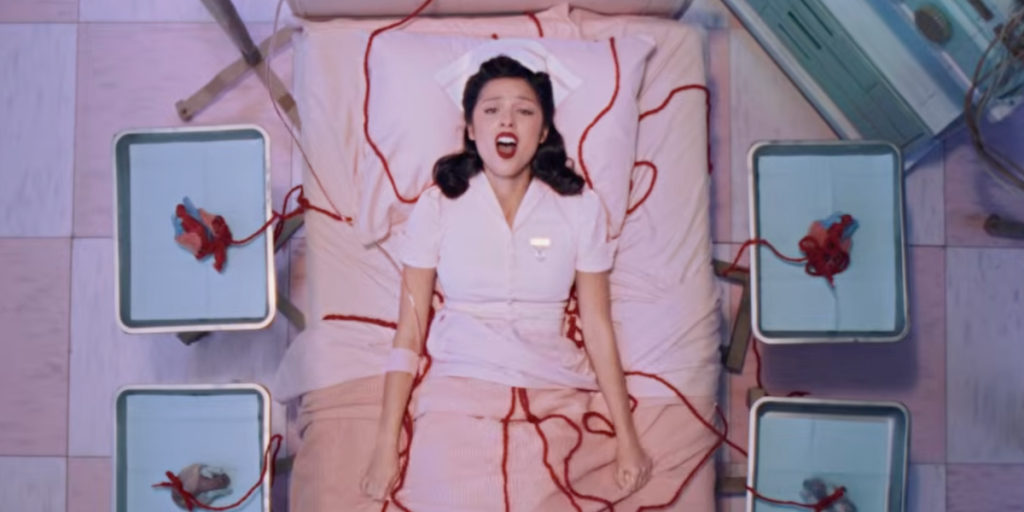
The intersection of contemporary pop culture and classical art has produced another fascinating example with Olivia Rodrigo’s newest music video for “the cure.” What strikes me most about this visual narrative is how deliberately it channels the raw emotional intensity of Frida Kahlo’s surrealist paintings, particularly her haunting 1932 work “Henry Ford Hospital.”
In my view, this isn’t just another pop video with artistic pretensions—it’s a genuinely thoughtful exploration of heartbreak that benefits immensely from its art historical references. The video follows Rodrigo as a medical professional attempting to develop a remedy for withered, graying hearts. The imagery becomes increasingly surreal as crimson strings emerge from her fingertips and body, creating a visual metaphor that feels both contemporary and timeless.
What makes this particularly compelling is the climactic hospital bed sequence, where Rodrigo lies connected to six hearts arranged around her through red string-like veins. This directly mirrors Kahlo’s “Henry Ford Hospital,” where the artist depicted herself in a blood-stained bed with six ribbons extending from her body to various symbolic objects including a fetus, medical instruments, and anatomical models.
I think this reference works because both pieces grapple with similar themes of physical and emotional disconnection. Kahlo’s painting emerged from her struggles with reproductive health following a devastating bus accident, while Rodrigo’s interpretation explores the aftermath of romantic disappointment. The song’s lyrics capture this perfectly: “My head is full of poison/ and my heart is full of doubt… It will never be the cure.”
For fans of art history and pop culture crossovers, this video represents exactly the kind of sophisticated visual storytelling that elevates music videos beyond mere promotional material. However, casual listeners who aren’t familiar with surrealist art might miss the deeper layers of meaning, which is unfortunate because the references add considerable depth to the narrative.
The production, helmed by directors Cat Solen and Jamie Gerin, incorporates early 2000s aesthetic elements reminiscent of Wes Anderson’s stop-motion work and Michel Gondry’s handcrafted visual style. This blend of influences creates something that feels both nostalgic and fresh, though I suspect it will resonate most strongly with viewers who appreciate visual art references in their entertainment.
This marks the second release from Rodrigo’s upcoming album, following “drop dead,” which took a more vengeful approach to heartbreak while drawing inspiration from Sofia Coppola’s “Marie Antoinette.” The contrast between these two singles suggests an artist who understands how to use visual references not as superficial decoration, but as genuine emotional amplifiers.
What’s particularly noteworthy is the broader trend of pop artists turning to female surrealist painters for inspiration. This isn’t accidental—these historical artists offer a rich vocabulary for expressing complex emotional states that traditional pop imagery often struggles to convey. For emerging artists looking to create more sophisticated visual content, studying how Rodrigo integrates these references could prove invaluable.
The five-minute track itself serves as a melodic meditation on disappointment, exploring how love can feel like medicine while ultimately failing to heal deeper wounds. This thematic complexity deserves the artistic treatment it receives, making the Kahlo reference feel earned rather than pretentious.